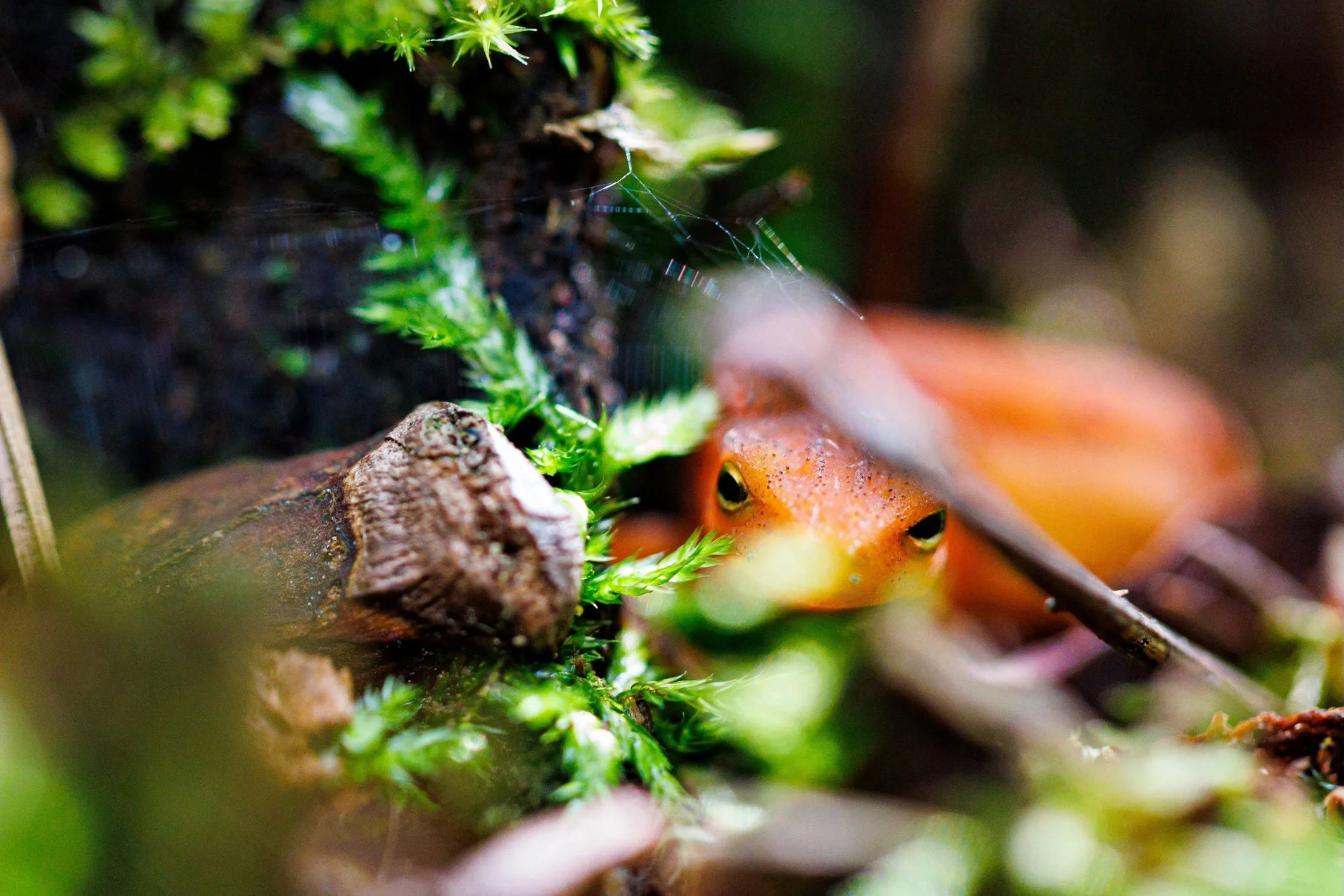
Salamander Dreams
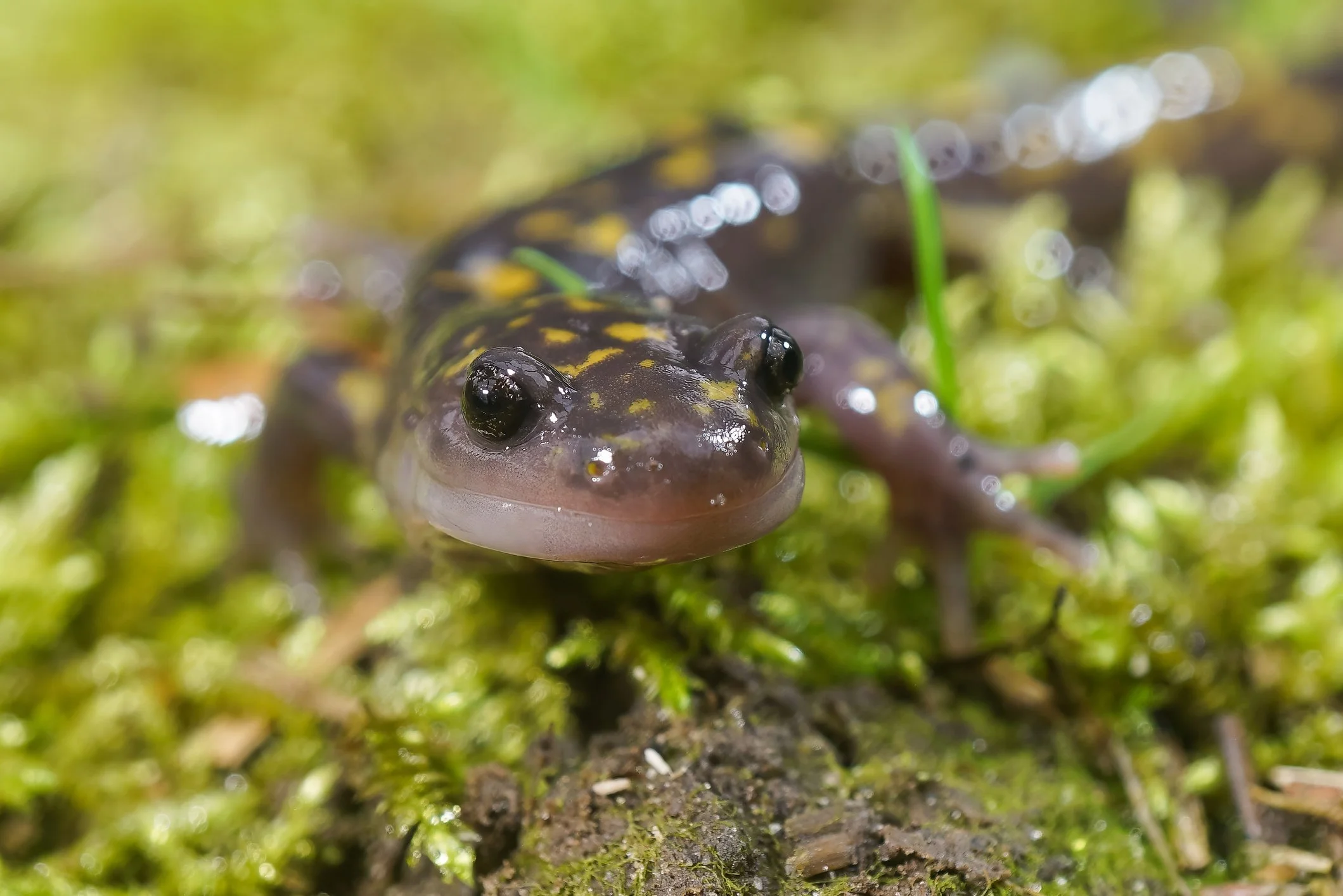
The redwood forest near my house is filled with invisible salamanders. Invisible to me, anyway. During daylight hours, hawks circle overhead and ladybugs pile up on fern fronds. Salamanders stay hidden as they slumber in hidden crevices and under fallen trees. And yet, perhaps salamander has been aware of my footfalls along forest pathways because she recently showed up in my dreams for several nights in a row.
In her presence, I dreamed of home. My dreams were not tied to specific houses or landscapes. Instead, they were tied to a feeling of complete and utter belonging. A feeling of safety and of being a harmonious part of a greater whole. The specifics of the dreams are lost to the dreamtime, but the emotional potency lingered with me. For several mornings, I woke up grieving something that I’ve never quite had.
In working with those potent dreams during the day, I discovered a secret world straight out of a fairy tale. It turns out that high in the canopy of old growth redwood forests, there exists a secret world that scientists didn't even know about until the 1990s. Across the canopy, thick mats of moss, some having taken 500 years or more to form, drape across the ancient branches. Mushrooms and ferns take root there. Insects, birds, and small mammals have made it their home. And living among them, rarely if ever touching the forest floor, is the wandering salamander, officially known as Aneides vagrans. From the vantage point of that secret world, hundreds of feet above the forest floor, humans may as well be ants, and the entire human world seems inconsequential.
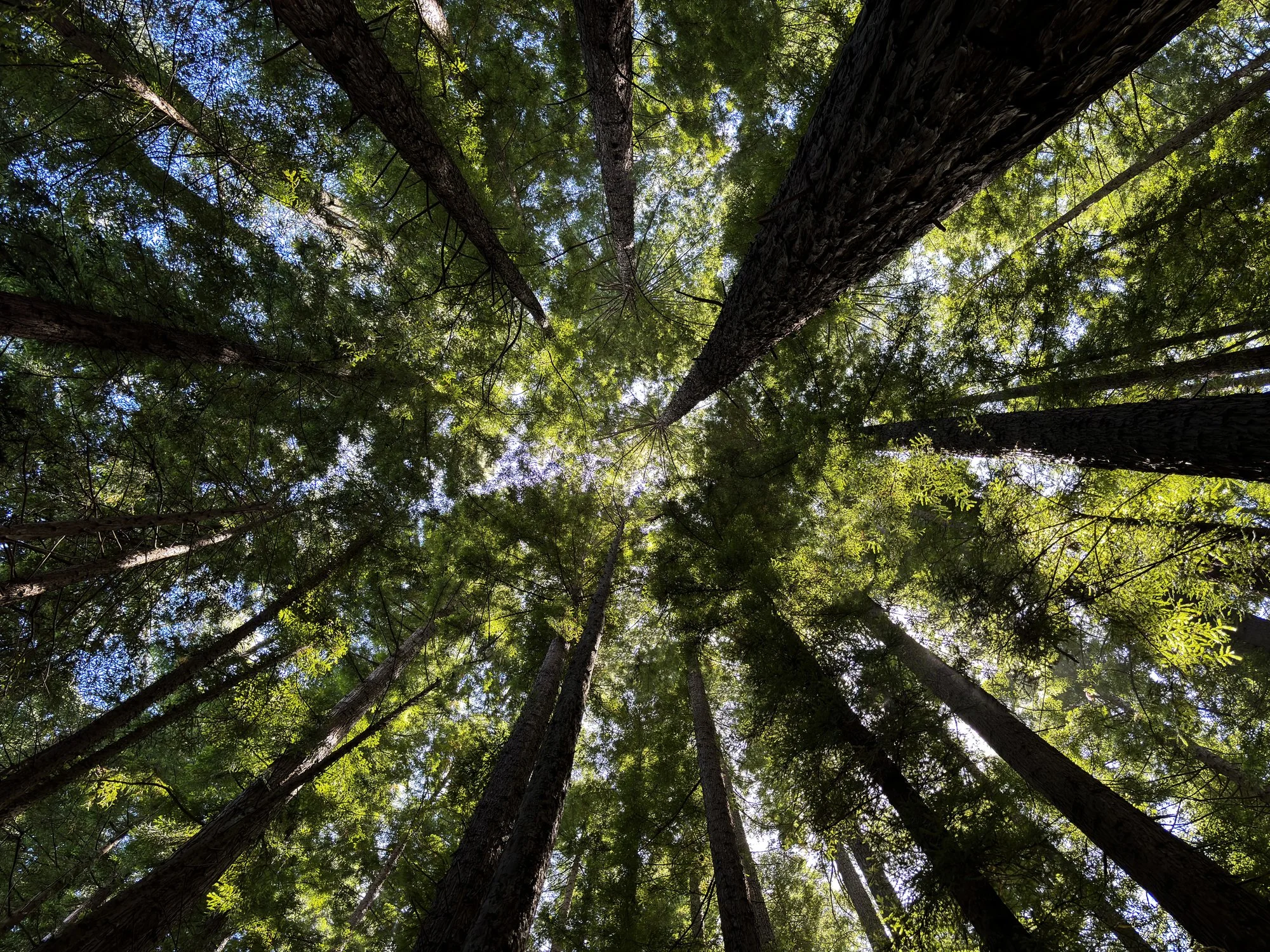
Amazingly, up in her forest aerie, the wandering salamander has quietly mastered the art of flight. Her anatomy doesn't suggest she should be able to fly. But, when a storm rolls through and the great trees begin to sway, she simply opens herself to the wind and glides from branch to branch rather than being tossed to the forest floor. It’s as though she has learned the language of the canopy world so completely that the storm is just another part of the conversation, rather than a calamity.
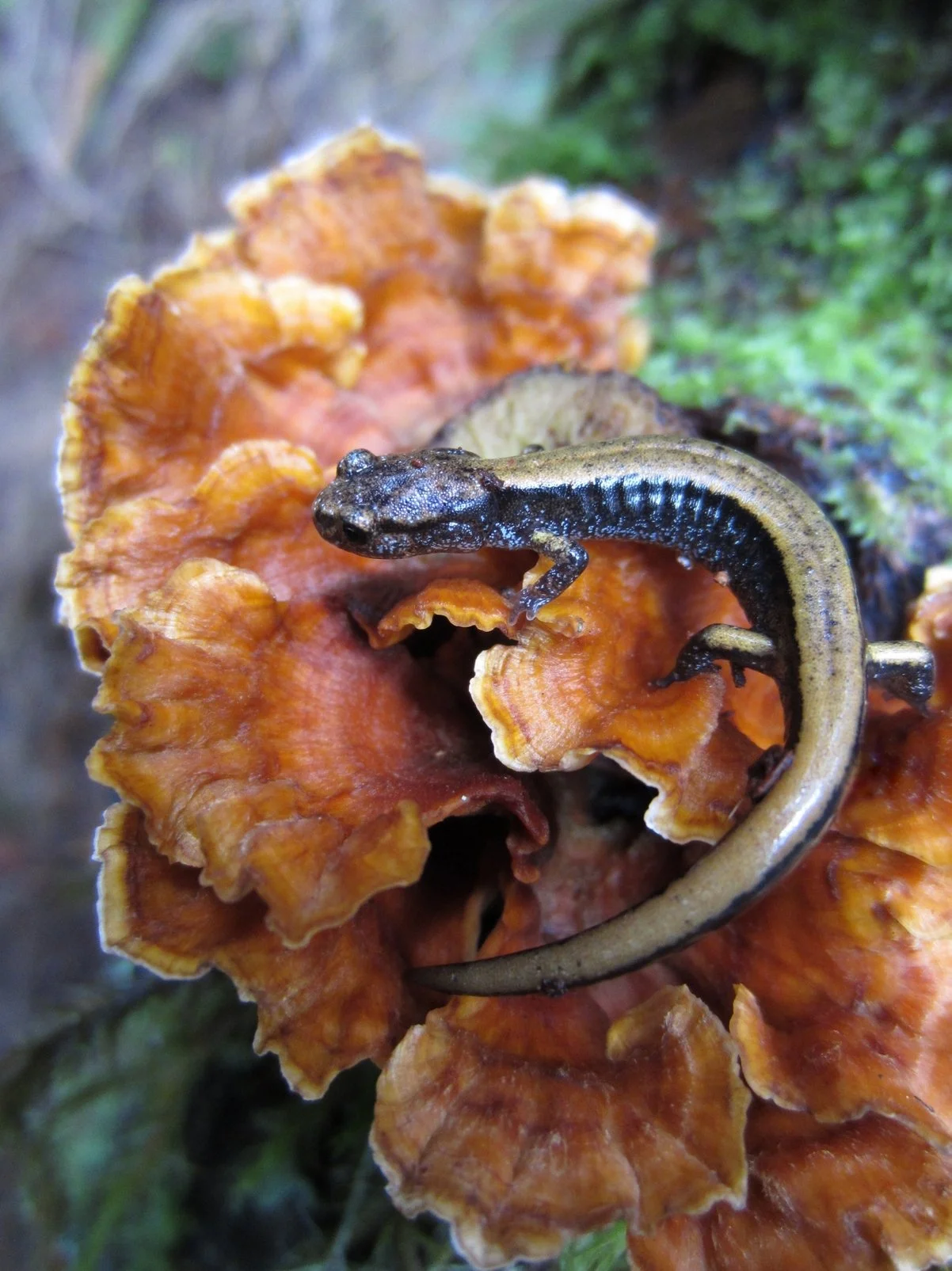
I was able to bring my final dream with her back into my waking world. In that dream, salamander invited me into that world high above the ground. I saw her perched on a moss mat, sitting quiet and still. She seemed perfectly self-possessed and perfectly at home. Her awareness seemed to encompass the entirety of her environment so that she was like the forest itself, concentrated into a small body. She didn’t fear the wind or the storms as something separate from her or something that happened to her. She understood them as uprisings of self and as times of flight.
Down in the human world, it feels like the storm is breaking open and we don’t yet know how to fly. Perhaps in some ways, the storm is breaking open precisely because we don’t yet know how to fly. Salamander has learned to adapt and become a harmonious part of whatever environment she finds herself in. Meanwhile, humans have been busy jealously hording resources in a misguided attempt to obtain mastery over our environment. But the storms find their way through our carefully constructed world, and we are left yearning for a home we’ve tried to insulate ourselves from.
A few days after my salamander dreams, I walked in the forest after a storm passed through. The redwoods had turned into a symphony of water. All around me, from every direction, came the sound of water. It was dripping from leaves, pooling between roots, and running in streams that hadn't existed the day before.
Standing in that cool damp air, breathing in the sounds of the forest, I felt nearly as complete and at home as salamander had been. For a moment, the separation we’ve convinced ourselves to cultivate at all costs vanished. My awareness harmonized with the water moving through old trees, with the misty air, and with the knowledge that somewhere near me, invisible and unhurried, salamander lay dreaming.